


D K J

The plate collectors I’ve known are a diverse group of people. For some, the interest stems from years of working on cars in shops. For others, it comes from an academic interest in studying events and records. Some start collecting young, as I did… the numbers and colours were irresistible to me as an Adidas-wearing, mop-haired kid in the early 1980s. And some start collecting later in life, as a way of keeping busy or trying something new. Such was the case for Doug Janney of Renfrew, Ontario.
Doug was fascinated by genealogy and history. He was a railroad enthusiast, an antique car owner, and a longtime collector of vintage clocks and firearms. Doug always was a natural-born speaker. He was articulate and had a memory for details, and he used those gifts to educate others. In fact, at one time, he was a professional firearms trainer. He enjoyed connecting with people, whether they needed firearm certification, or whether they were just interested to learn about clocks. Doug prepared many presentations for antique hobbyist groups or historical societies. He had no qualms about contacting folks to learn more or follow leads, and that’s basically how I came to know him late in life.
Doug had previously lost his wife Lynda to cancer, and a couple of years later, he himself was diagnosed with it. He was given perhaps six months to live, but agreed to a hormone therapy trial that, if successful, had the potential to give him another few years. It was during this borrowed time that I first had the pleasure of meeting Doug.
It was the late summer of 2024, and Doug was looking ahead to a long, boring winter without much to do, and he started to look at licence plates as an easily-accessible hobby to learn about, and pass the time. Doug discovered my then-active YOM business online, where I would sell pairs of registrable Ontario plates to classic car owners. Sometimes collectors would come my way, and I would do my best to dissuade them from buying my premium-priced stock when others could be found elsewhere for much cheaper.
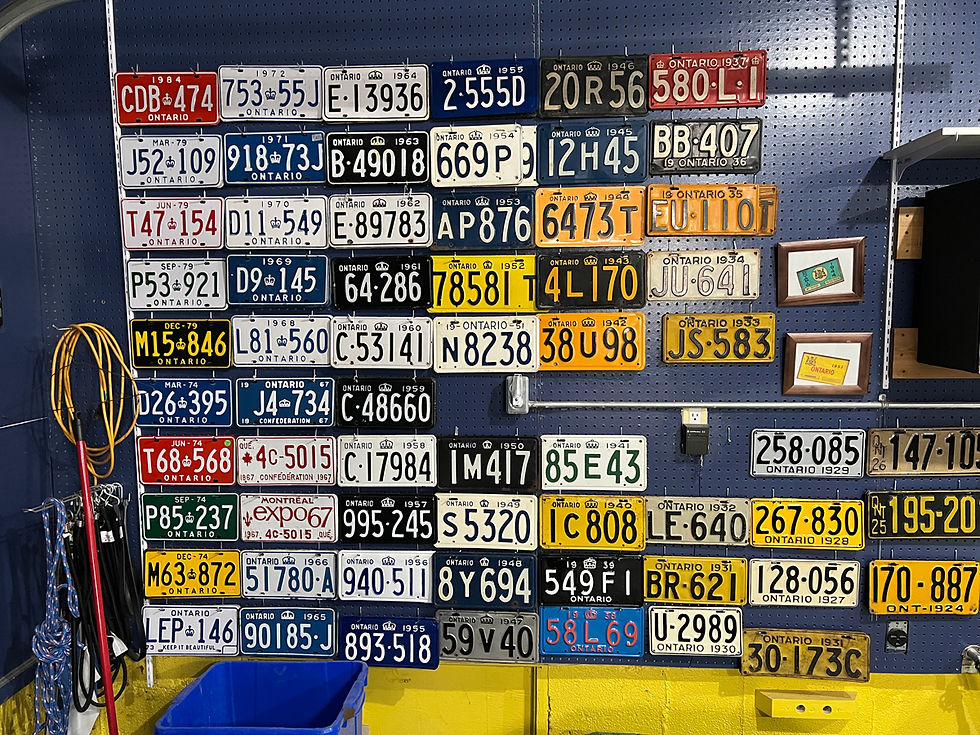
My business was set to retire, and I had a number of older original pairs that I considered “slow movers” because there are relatively few classic car owners for those years, like 1924, 1933, 1934, 1936, or 1942. Doug was looking to collect a run of Ontario pairs, and I was probably going to liquidate those pairs anyway, so I sold them to him at cost. I wouldn’t have done that if I’d had no plans to close, but my ramp-down was well underway, my money was already made, and I figured I’d try to help a new collector.

Doug told me about his medical situation, and that he didn’t know how long he had. Nonetheless, he decided to take a shot at collecting Ontario pairs as far back into history as he could. The value of pre-1920 plates tends to skyrocket as compared to post-1920, so I spent some time describing the manufacture of the rubber, porcelain and wire-rimmed tin years. He enjoyed digesting the information. I advised him that the prices could be steep for those years if he found them, and I showed him how to recognize repaints and replicas, but he was game. His main goal was just to collect: Originals whenever possible, and reppies if originals couldn't be found.

Over the ensuing months, I was able to help Doug find or validate the authenticity of a few key years, like 1918, 1915, and 1913, plus a handful more through the 1920s and 30s. Doug had made lots of connections over the years, and the idea of making phone calls to pursue a lead was irresistible to him. He was able to find gorgeous 1921, 20, 19, and 17 pairs on his own, just by making those calls and paying visits. He settled for a couple of early repaints. Soon enough, only the toughie pairs remained: the porcelain 1911s, and a set of rubbers from 1905-1910. I wasn’t optimistic that he would find them, as they come out of the woodwork very infrequently. But I was underestimating Doug’s tenacity.

Doug again used his contacts to locate the last missing items from his collection. Both of them came from the same person, who I assumed no longer had either one, but Doug sniffed them out. I gave him some advice about ballpark value, and by the following July, he had finally convinced the owner to part with them, for a price that was within the ballpark of reason. Mission accomplished! Doug, on borrowed time, had amassed a collection of Ontario plates (mostly pairs) all the way to the rubber era. The only two pairs he was missing were represented by singles (1916 and 1913).

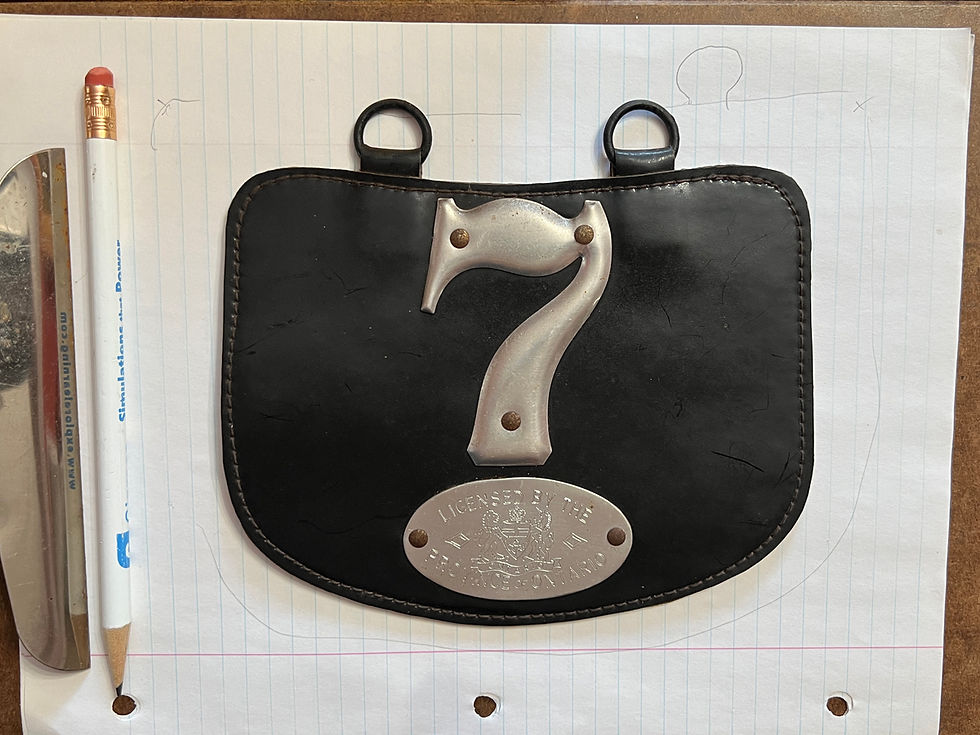
Unfortunately, Doug received some discouraging medical news in the late summer of 2025: It appeared that his treatments were starting to lose their effectiveness. That was confirmed in early fall with the news that the cancer was spreading. Doug always knew that his time as a plate collector wouldn’t be a long one, and he had a lot of fun sinking his teeth into the hobby, even if he didn’t have the time to upgrade his ‘16 and ‘13 singles. Acquiring a real Ontario leather shield was unlikely to happen, but Doug had acquired a well-crafted replica from a contact within the Eastern Ontario car scene.
I went to visit Doug in late September. He had begun making arrangements for the dispersal of his collectibles. His plate collection wasn’t entirely “new to him” within the past year. He had been hanging onto some of them for decades, and was looking to get a value for the bunch in anticipation of moving them to a local dealer or collector. I spent the morning helping him log and value his plates. He had received an offer the previous week, and I was pleased to confirm to him that the amount was reasonable. I didn’t want to make a play for any of it myself, as I was already happy with my own collection, and the satisfaction of helping out was its own reward. Doug struck a fair deal to sell them within a couple of days.
With Doug’s approval, I wrote this tribute in October of 2025, for eventual publication here after his passing. I texted it to him, much to his enjoyment, although we were uncertain how long it would stay “locked and loaded” before being published. That was the last time I talked to him. Within a few weeks, my texts would go unanswered. Doug had planned carefully for himself, and enough time has passed that I presume his journey has since continued.
Doug’s time within the hobby has reminded me that we are merely custodians of history, and the jewels within our collections will outlive us. I’m not yet retired, and my health is good. But my porcelain plates, my rubber plates, and my number 508 leather shield—which I consider “keepers” in the most permanent sense—will no doubt become the care of other collectors one day. It’s important to pass on what we learn, to pass on our enthusiasm, and our goodwill. We’re here for a good time, after all… not a long time.


Comments